How an Interior Designer Course Can Help You Start a Career in Interior Designing
Building a successful career in interior designing requires structured expertise, practical exposure, and professional credibility. We recognize that creativity alone is not sufficient to thrive in this competitive industry. A well-curated interior designer course provides the technical foundation, design discipline, interior design course and industry alignment necessary to transition confidently into professional practice. Through formal training, we gain the ability to design spaces that are functional, aesthetically refined, and commercially viable.
Why an Interior Design Course Builds Professional Readiness
An interior design course establishes a systematic approach to learning that aligns with industry expectations. We are trained to think strategically about space utilization, user experience, and visual harmony. The curriculum introduces design fundamentals alongside real-world applications, enabling us to develop consistency and precision in our work.
Through structured modules, we master spatial planning, color coordination, lighting design, and furniture layouts. This disciplined learning process eliminates guesswork and allows us to execute projects with clarity and confidence from the outset of our careers.
Skill Development Through an Interior Designer Course
A professional interior designer course equips us with in-demand skills that translate directly into employability and independent practice.
Design Conceptualization and Visualization
We learn to transform abstract ideas into cohesive design concepts using sketches, mood boards, and digital visualization tools. This capability allows us to communicate design intent effectively to clients and stakeholders.
Technical Drafting and Software Proficiency
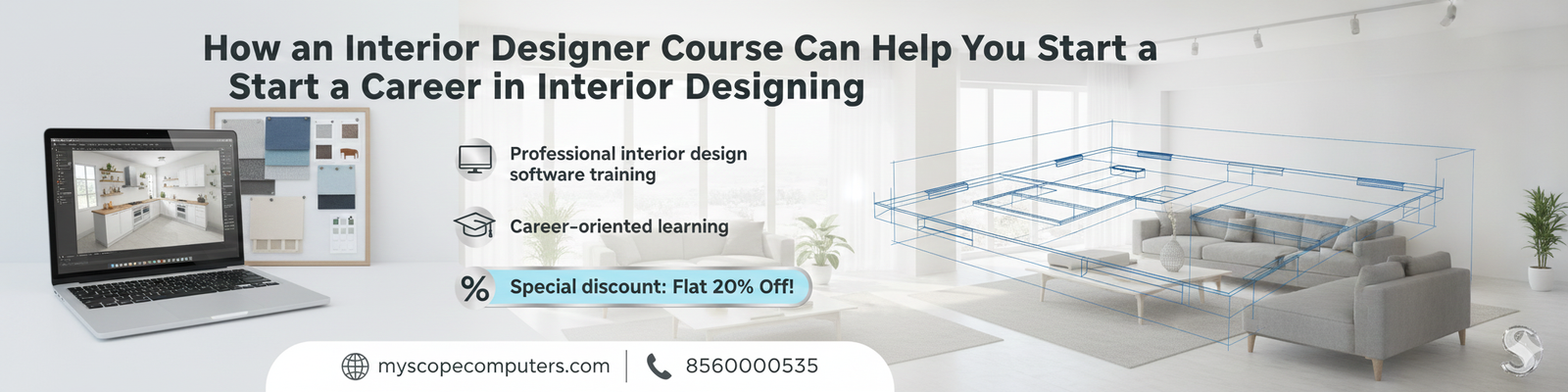
Interior designing relies heavily on accuracy. We gain proficiency in industry-standard software such as AutoCAD, 3D modeling tools, and rendering platforms. These skills enable us to produce detailed drawings, layouts, and realistic visual presentations.
Material Selection and Specification
An interior design course deepens our understanding of materials, finishes, textiles, and lighting systems. We learn to balance durability, sustainability, aesthetics, and budget while specifying materials for diverse project requirements.
Career Opportunities After an Interior Designing Course
Completing an interior designing course opens access to a wide range of professional pathways across residential and commercial sectors.
Residential Interior Design
We design personalized living environments that reflect client lifestyles while maintaining functional efficiency and visual coherence.
Commercial and Corporate Interiors
Office spaces, retail outlets, and hospitality environments require strategic planning and brand integration—competencies strengthened through formal training Know More.
Freelance and Consultancy Practice
With project management and client-handling skills embedded in the curriculum, we are prepared to operate independently, manage vendors, and deliver end-to-end design solutions.
Practical Training and Portfolio Excellence
Hands-on learning forms the backbone of a strong interior designer course. Studio projects, live assignments, and site exposure allow us to apply theoretical knowledge in practical settings. This experiential learning sharpens decision-making and problem-solving abilities.
We graduate with a professionally curated portfolio showcasing concept development, technical drawings, and visual renders. This portfolio becomes a decisive asset when securing employment or clients.
Understanding Industry Standards and Execution
An interior designing course trains us to work within regulatory frameworks and professional standards. We gain familiarity with building codes, safety regulations, and ergonomic principles. This knowledge ensures our designs are compliant, efficient, and professionally executed, enhancing trust with clients and employers.
Final Thought
Beyond design execution, we are trained in budgeting, project timelines, client presentations, and professional ethics. An interior design course integrates these elements to ensure long-term career sustainability.
We develop the confidence to price projects accurately, interior designing course manage contracts, and build lasting professional relationships, positioning ourselves for growth and leadership roles within the industry.
Frequently Asked Questions
Is an interior designer course essential for starting a career in interior designing?
While not mandatory, an interior designer course provides structured training, industry exposure, and professional credibility that significantly improves career prospects.
What skills do we gain from an interior design course?
We gain design visualization, technical drafting, material knowledge, space planning, and project management skills aligned with industry requirements.
Can we start freelancing after completing an interior designing course?
Yes, most interior designing courses include business and practical training that prepare us for freelance and consultancy roles.
Does an interior designer course include real-world experience?
Comprehensive courses include studio projects, site visits, internships, and live assignments to ensure practical exposure.
How does an interior design course support long-term career growth?
The structured foundation, technical expertise, and professional skills gained through an interior design course support career advancement, specialization, and independent practice.